

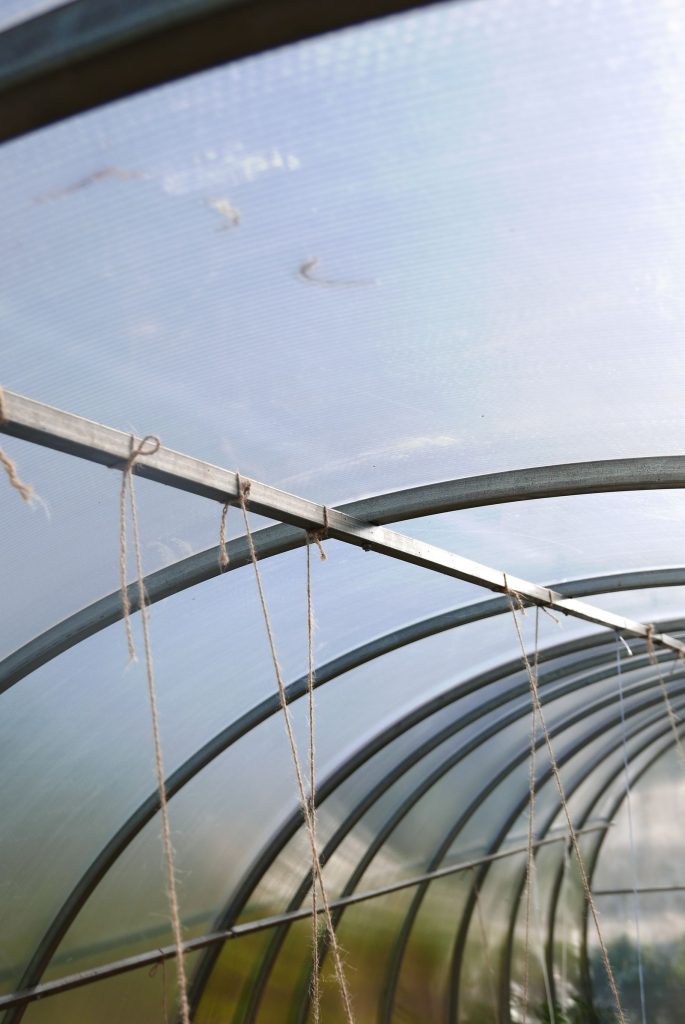
Cellular polycarbonate appears in many projects when glass seems too heavy, too fragile, or simply too demanding to install. It provides light, protects against rain, does not heavily load the structure, and withstands everyday use well. That’s why it is so often used for terraces, roofs, skylights, canopies, and facades. It is not a material “for everything,” but in a well-chosen location, it can solve several problems at once.
What is cellular polycarbonate and why is it used in construction?
Cellular polycarbonate is a plastic sheet with an internal structure resembling a system of small channels. It is not a solid panel. Inside, there are cells—empty spaces separated by thin walls.
It is precisely this structure that determines its character. The sheet is lightweight but retains good rigidity. It transmits light but can also diffuse it. It allows you to build a roof that does not overwhelm the structure and does not turn the space underneath into a dark corridor.
Compared to glass, cellular polycarbonate is less demanding in terms of weight. In many projects, this is a major advantage. A lighter covering means simpler transport, more convenient installation, and less load on load-bearing elements.
What properties does cellular polycarbonate have?
The reason is quite simple: this material responds well to the needs of modern construction. Investors want to bring light into spaces but do not always want to install heavy glazing. Contractors are looking for durable materials that are easier to work with. Designers need solutions that can be adapted to different types of buildings.
Cellular polycarbonate combines several features that are particularly important for roofing and lightweight structures:
- low weight,
- good light transmission,
- impact resistance,
- possibility to choose thickness and color,
- better insulation than a single, thin sheet,
- outdoor application with appropriate UV protection.
This does not mean it will always replace glass. Glass will still be a good choice where perfect transparency and a specific architectural effect are most important. Polycarbonate wins rather in those places where durability, lightness, and freedom of application matter.
How does the cellular structure affect weight, light, and insulation?
The cells inside the sheet are not an insignificant addition. They are what make cellular polycarbonate have different properties than a solid sheet. The air trapped in the cells improves insulation, and the arrangement of walls strengthens the sheet without excessively increasing its mass.
This is clearly visible in the example of canopies. Above a terrace, building entrance, or passage between buildings, a material is needed that will provide shelter from precipitation but will not cut off daylight. A solid covering often shades the space too heavily. Glass provides light but requires a more substantial structure. Cellular polycarbonate falls between these solutions.
It has another feature that’s easy to overlook when simply comparing parameters. It can change the quality of light. The transparent version provides the strongest light transmission. Opal gives a softer effect and limits harsh rays. Tinted works well where roofing needs to protect not only from rain, but also from excessive sun.
Where is cellular polycarbonate used?
Most often where a lightweight and durable light-transmitting covering is needed. It sounds broad, but in construction it translates to very specific applications.
Cellular polycarbonate works well for:
- terrace roofing,
- canopies and passageways,
- roof skylights,
- lightweight roof coverings,
- facades of commercial and industrial buildings,
- wall cladding,
- technical enclosures.
In single-family homes, it most often appears over terraces, at entrances, in pergolas, or at carports. In commercial and industrial facilities, it’s used over larger areas, especially where interior lighting is needed without designing heavy glazing.
However, not every sheet will suit every location. A small canopy over doors requires different parameters than larger roofing exposed to snow, wind, and intense sunlight.
Cellular polycarbonate for roofing and canopies — when is it a good choice?
This is one of its most natural applications. A roof or canopy made of polycarbonate allows you to shelter a space while still keeping it bright. That’s exactly why the material so often ends up on terraces, passageways, canopies, and lightweight structures at buildings.
When choosing a sheet for roofing, it’s not worth relying solely on appearance. Thickness, support spacing, pitch angle, and installation method are highly significant. If the sheet is too thin or poorly supported, the roofing may not fulfill its function as it should.
The direction of the cell channels is also important. They should run along the slope so moisture can drain. Edges must be protected with appropriate tapes and profiles. These aren’t details for perfectionists, but elements that affect the durability and appearance of the entire roofing.
Poorly sealed cells can collect dust, water, and contaminants over time. Initially, this may be barely visible. After several seasons, however, it can ruin the effect of even a well-designed structure.
Cellular polycarbonate for facades — which buildings is it suitable for?
Facades made of cellular polycarbonate have a completely different character than traditional render, metal sheeting, or classic facade panels. They are visually lightweight, transmit light, and suit buildings with a technical, modern character.
Such material can be found in sports facilities, industrial, warehouse, service, and commercial buildings. It works particularly well where the facade is meant to provide daylight to the interior while simultaneously sheltering it from external conditions.
Polycarbonate doesn’t have to be completely transparent. The opal variant provides softer light and a greater sense of privacy. Tinted sheets help reduce heat build-up. Coloured options can become part of a building’s identity, though it’s easy to overdo it here. The best effect usually comes from selection subordinated to the function of the structure, not momentary fashion.
For cladding, the material’s behaviour under temperature is particularly important. Polycarbonate expands and contracts, therefore it requires appropriate expansion joints and a fastening system. “Rigid” installation can lead to stress, which over time will affect the appearance and durability of the surface.
Multiwall polycarbonate or glass — what to choose for roofing or cladding?
This question comes up often, though the answer shouldn’t be: always one or always the other. Glass and polycarbonate have different properties, so they work well in different situations.
Glass provides high transparency, rigidity and an effect that cannot be fully replaced by plastics. It’s a good choice for prestigious glazing, façades and places where a clean, elegant pane is important.
Multiwall polycarbonate is worth considering when the following are more important:
- lower weight,
- impact resistance,
- simpler installation,
- ability to diffuse light,
- reduced structural load,
- application in lightweight roofing or cladding.
For a patio, canopy, skylight or technical cladding, polycarbonate will often be the more sensible material. Not because it imitates glass. Rather because it meets different needs.
How to select the thickness and colour of multiwall polycarbonate?
The colour of the sheet affects appearance, but also the comfort of using the space. Clear polycarbonate provides plenty of light. Opal diffuses rays and reduces harsh contrasts. Tinted helps reduce heat build-up under roofing.
So it’s worth starting with the question: what is this sheet supposed to do? If we want a bright patio by the north elevation, the clear variant may be a good choice. If the roofing is on the south side, opal or tinted material may prove better.
Thickness should also result from conditions, not intuition. Small covers may require a different solution than large roofing structures. Significant factors include:
- surface area,
- spacing of supports,
- snow load,
- wind exposure,
- expected insulation properties,
- installation method.
For larger structures, it’s worth adhering to the manufacturer’s documentation or consulting selection with the supplier. A sheet that’s too thin may be a false economy. One that’s too thick doesn’t always have technical and economic justification.
Most common mistakes when selecting and installing multiwall polycarbonate
Multiwall polycarbonate is not a difficult material, but it doesn’t forgive careless installation. Some problems only appear over time, so they’re easy to underestimate at the purchasing stage.
The most common mistakes are:
- choosing the sheet based solely on price,
- mismatching thickness to support spacing,
- failure to account for snow and wind loads,
- lack of chamber sealing,
- installation without expansion joints,
- use of random profiles,
- installing the UV-protected side facing inward.
The last point is particularly important. If the sheet has UV protection on only one side, it must be installed according to the marking. Otherwise, the material will lose its properties and appearance more quickly.
It’s also worth remembering that polycarbonate works under the influence of temperature. It needs space for expansion and contraction. Installation that’s too tight can lead to stress, deformation, or damage at fixing points.
Is multiwall polycarbonate a good choice?
Yes, if it’s selected for the right application. Multiwall polycarbonate works best where light transmission, lightness, and durability are needed. It performs well in canopies, skylights, lightweight roofs, and façades that are meant to be functional, durable, and less structurally demanding than glass.
It shouldn’t be treated as a random material. The selection of thickness, colour, UV protection, and installation system determines how the sheet will look after several years. A well-designed polycarbonate canopy can be comfortable, aesthetic, and durable. A poorly chosen one will quickly show its flaws.
Multiwall polycarbonate offers great flexibility, but requires sensible decisions at the start. And that’s when it shows its greatest advantages.
Multiwall polycarbonate — most frequently asked questions about properties, installation, and application
What is multiwall polycarbonate?
Multiwall polycarbonate is a lightweight plastic sheet with an internal chamber structure. Thanks to this construction, it transmits light, has low weight, and withstands impacts well.
Where is multiwall polycarbonate used?
It’s most commonly used for terrace canopies, lightweight structure roofs, skylights, shelters, walkways, façades, and wall cladding.
Is multiwall polycarbonate suitable for roofing?
Yes, provided the appropriate thickness, support spacing, pitch, and installation system are selected. Proper chamber sealing and correct orientation of the UV-protected side are also important.
Is multiwall polycarbonate better than glass?
In canopies and lightweight structures, it’s often more practical because it’s lighter and more impact-resistant. Glass works better where full transparency and a prestigious effect are most important.
What thickness of multiwall polycarbonate is best?
It depends on the structure size, support spacing, loads, and installation location. For larger surfaces, thicker sheets are usually needed, but the final selection should be based on technical documentation.
Does multiwall polycarbonate require UV protection?
Yes, for external applications UV protection is very important. The sheet must be installed according to the manufacturer’s marking so that the protective layer faces outward.
What to watch out for when installing cellular polycarbonate?
The most important aspects are: proper channel direction, edge protection, maintaining expansion gaps, selecting appropriate profiles, and installation according to manufacturer’s recommendations. Errors in these areas can shorten the sheet’s service life.
